

9 Days, 9 Colors: The Ultimate 2026 Navratri & Dussehra Saree
9 Days, 9 Colors: The Ultimate 2026 Navratri & Dussehra Saree
Planning your festive wardrobe is easily one of the most exciting parts of the season. Navratri brings nine nights of grand celebration, honoring the diverse avatars of Goddess Durga. And if you are participating in the age-old tradition of wearing the designated color for each day, you know that mapping out your outfits ahead of time saves you from last-minute wardrobe panic!
This guide walks you through the official 2026 day-by-day color calendar for Shardiya Navratri (running from October 11 to October 19, 2026, leading up to Dussehra on October 20). We’ve also thrown in practical fabric choices and smart styling tips to keep you looking effortless from morning pujas to late-night Garba circles.
The Meaning Behind the Nine Festive Colors
Navratri translates literally to “nine nights,” a period dedicated to the Navadurga (nine manifestations of Goddess Durga). The festival follows a beautiful spiritual arc, transitioning from raw power and strength on the initial days to profound wisdom and spiritual fulfillment by the end.
Dressing in the specific color of the day isn’t just a style statement—it is a conscious way to align yourself with the unique energy of the goddess being celebrated that day.
Because the festival aligns with the Hindu lunar calendar, the color sequence shifts every year. The order depends entirely on the specific day of the week the festival begins, as each weekday is governed by a specific planetary color. Since Shardiya Navratri 2026 kicks off on a Sunday, the sequence opens with a vibrant orange.
2026 Navratri Saree Color Calendar: Day by Day
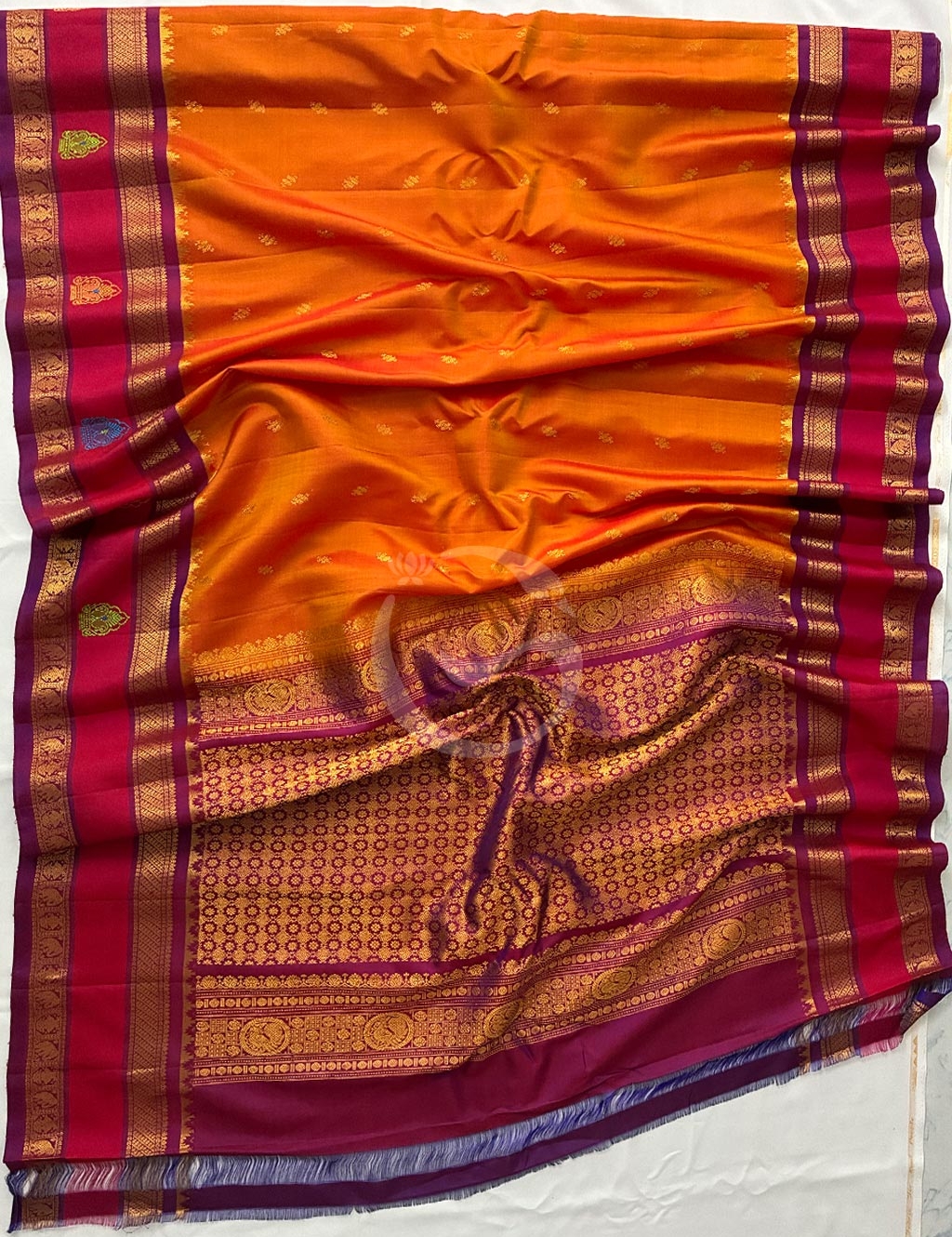
Day 1 (October 11) – Orange
Goddess: Maa Shailputri
The Vibe: High energy, warmth, and new beginnings.
Style Idea: Kick off the festivities with a striking saffron, Orange, rust, or tangerine saree. It is bright enough for the morning Ghatasthapana rituals and transitions beautifully into the first dancing night of the season. Accentuate it with classic gold jewelry.
Gadwal Peach Orange Jari buttas with redish meganta butta gap border handloom silk saree
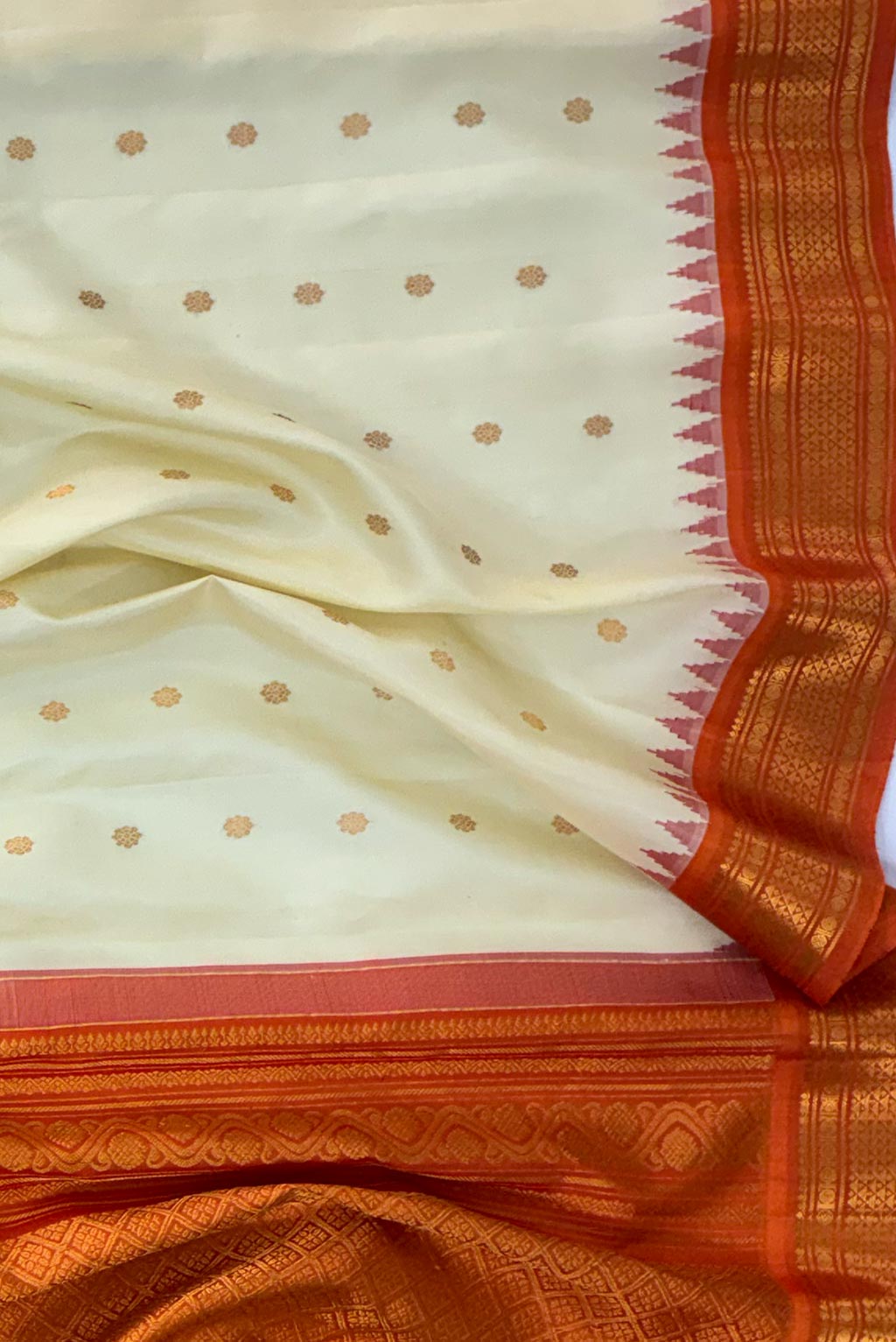
Day 2 (October 12) – White
Goddess: Maa Brahmacharini
The Vibe: Serenity, peace, and absolute purity.
Style Idea: After the brightness of day one, white brings a sophisticated, calming contrast. Opt for a crisp ivory or off-white saree featuring a rich golden zari border. To give the look a personal touch without breaking the theme, pair it with a contrasting red or coral blouse.
gadwal Cream half white shade butas, orange border handloom silk saree
Day 3 (October 13) – Red
Goddess: Maa Chandraghanta
The Vibe: Power, fierce devotion, and passion.
Style Idea: As the most iconic festive shade, red is a certified showstopper. This is the perfect night to bring out your heavy Banarasi silks. The richness of a red silk saree holds its depth beautifully, even under the soft, ambient lighting of festive pandals.
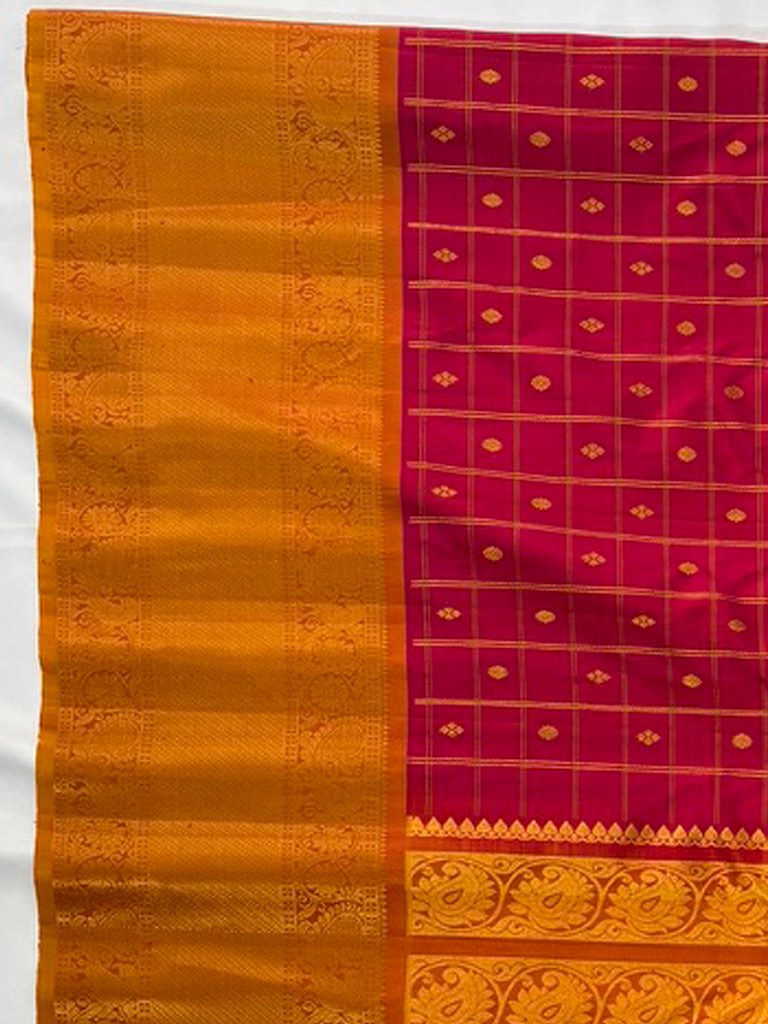
Big Border Gadwal Pure Handloom dual shade body Checks with Butas Megana Pink with Orange
Day 4 (October 14) – Royal Blue
Goddess: Maa Kushmanda
The Vibe: Elegance, depth, and majesty.
Style Idea: Royal blue is an incredibly regal shade that doesn’t get worn often enough during festivals, meaning you will easily stand out. Contrast the deep jewel tone with oxidized silver jewelry for a cool, modern aesthetic, or stick to traditional gold for a warmer feel.
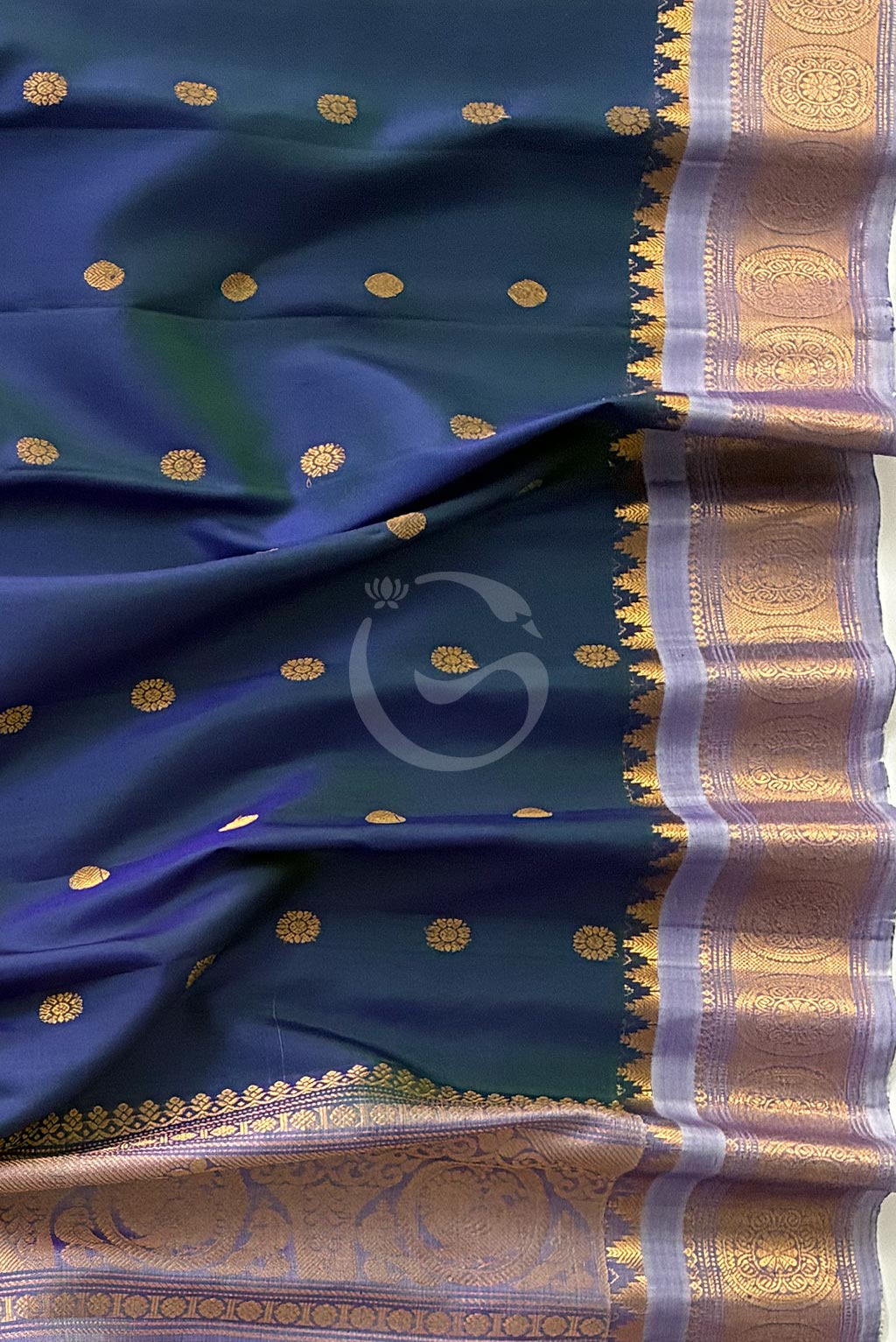
gadwal Navy Blue-butas with self grey lavender border handloom silk saree

Day 5 (October 15) – Yellow
Goddess: Maa Skandamata
The Vibe: Joy, optimism, and brightness.
Style Idea: Always a favorite in festive fashion, yellow is incredibly flattering and radiates positivity. Look for rich tones like mustard, honey, or marigold yellow rather than flat primary shades to add an extra layer of depth to your ensemble.
Gadwal Semi Black Saree with Golden yellow & Magenta border
Day 6 (October 16) – Green
Goddess: Maa Katyayani
The Vibe: Renewal, growth, and nature.
Style Idea: Green looks mesmerizing in motion, making it a fantastic pick for Garba nights. A deep emerald or bottle green saree feels formal and grand, while lighter mint or sage greens offer a more playful, contemporary energy.
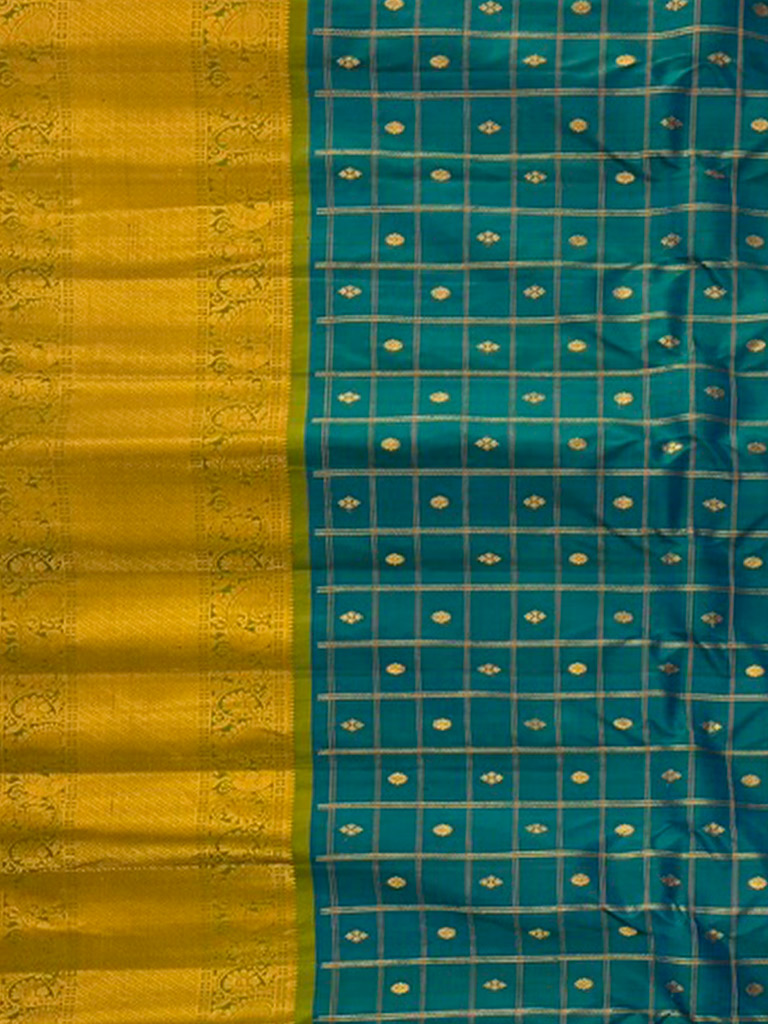
Big Border Gadwal Pure Handloom dual shade body Checks with Butas Self Green
Day 7 (October 17) – Grey
Goddess: Maa Kalaratri
The Vibe: Understated strength, balance, and resilience.
Style Idea: If bright, loud colors aren’t your personal preference, Day 7 is your time to shine. Instead of heavy embroidery, focus on unique textures. A metallic grey linen or a silver-toned textured Tussar saree can look incredibly chic and easily outshine flashier outfits.
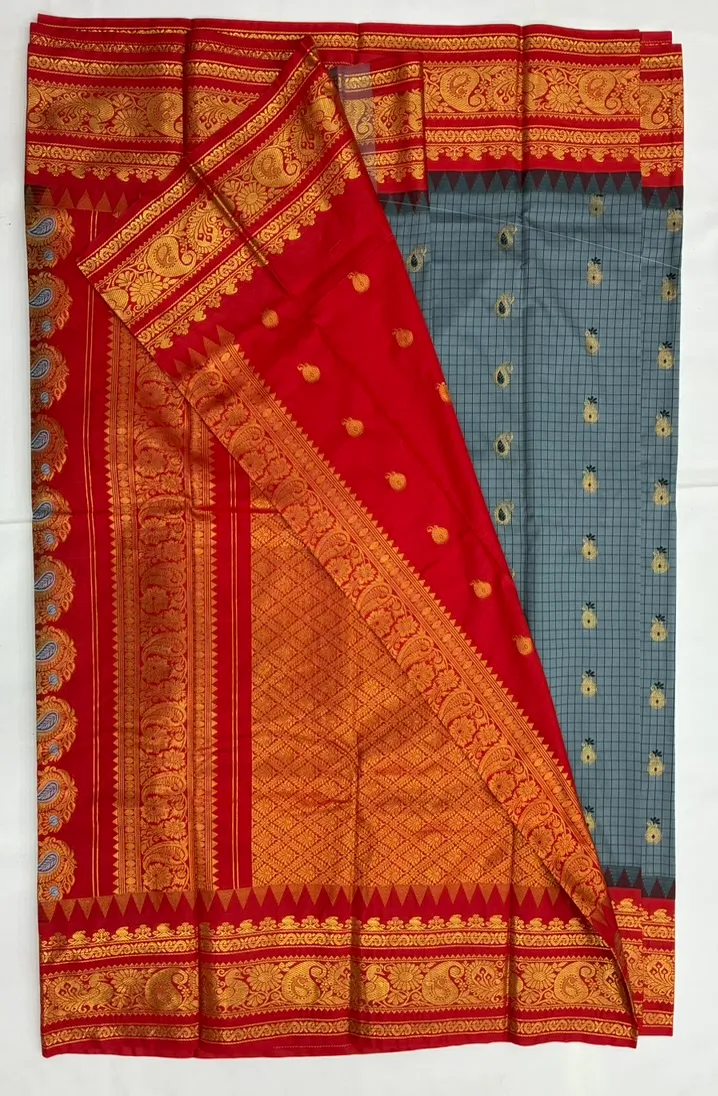
Gadwal Semi Saree Checks Butas Rich Pallu and Border Yash Grey and Red
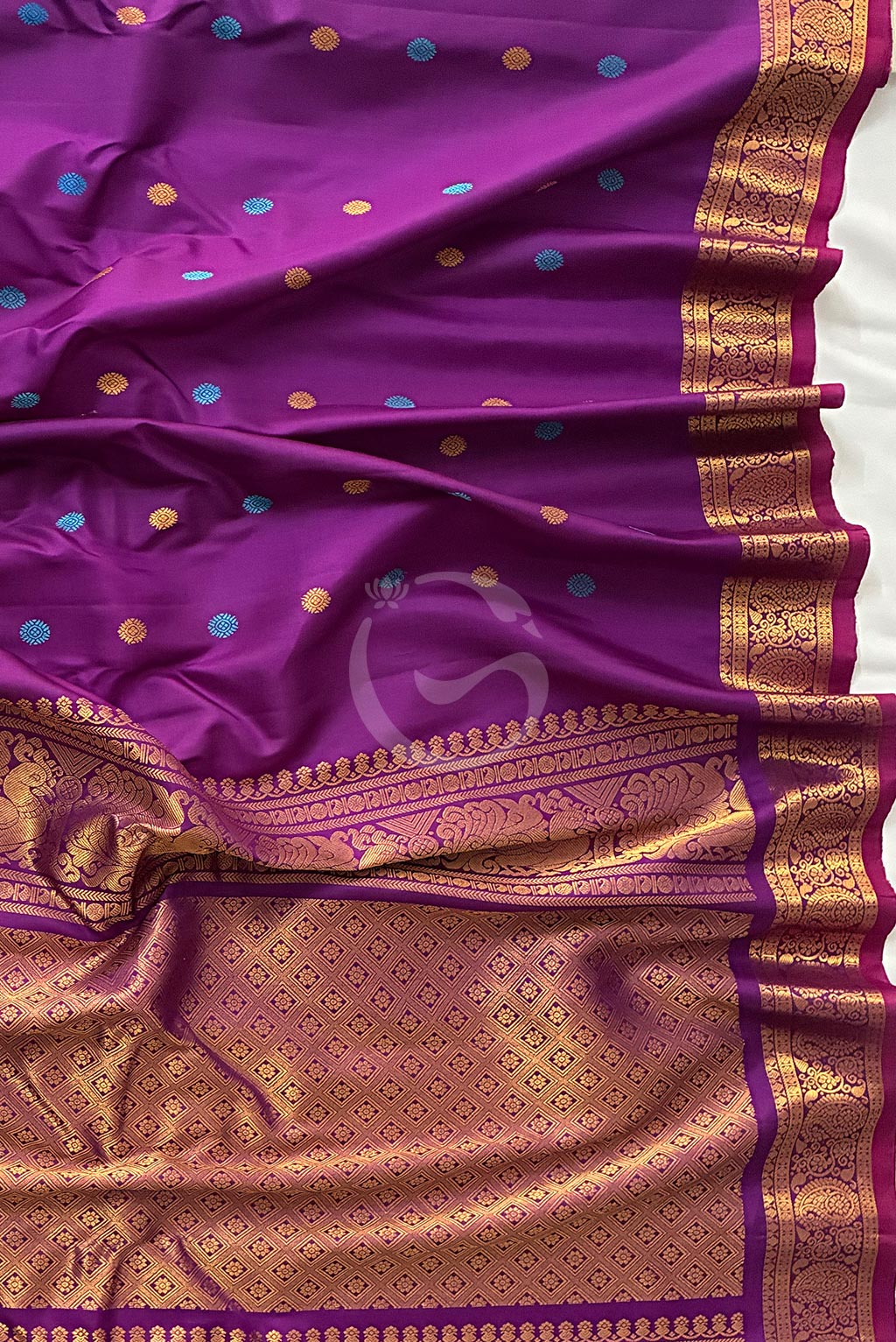
Day 8 (October 18) – Purple
Goddess: Maa Mahagauri
The Vibe: Luxury, grandeur, and royalty.
Style Idea: As the festival nears its peak on Maha Ashtami, purple brings an unmistakably lavish feel. It is a striking tone that bridges the gap between the bright daylight colors and the deeper evening hues. Pair a purple Kanjeevaram with bold statement earrings to complete the look.
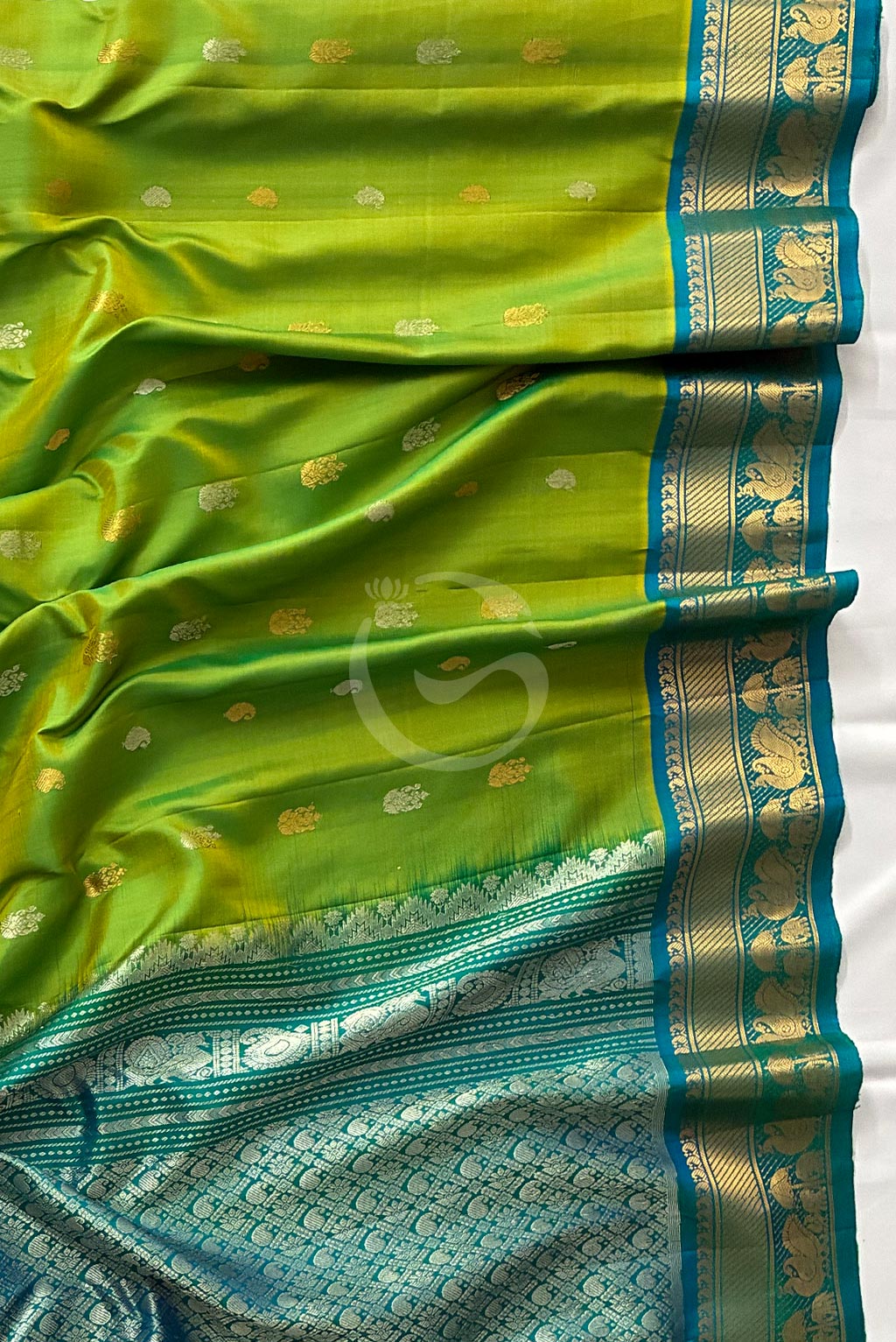
Day 9 (October 19) – Peacock Green
Goddess: Maa Siddhidatri
The Vibe: Spiritual fulfillment, uniqueness, and grace.
Style Idea: The final night wraps up with a gorgeous teal or peacock blue-green shade. Because it is a less common color, it always leaves a lasting impression. Save one of your finest, most comfortable handlooms or silks for this grand finale.
Fabric Guide: Dressing for Comfort and Movement
Looking stunning is only half the battle; staying comfortable for hours is what actually matters.
- Pure Silks:Ideal for formal morning pujas and the biggest celebratory nights (like Red, Purple, and Peacock Green). Silk holds deep colors beautifully and gives an instant regal drape.
- Cotton-Silk Blends: The ultimate compromise. You get the festive sheen of silk paired with the breathable comfort of cotton—perfect for full days that involve running errands followed by family gatherings.
- Tussar & Organza: Perfect for the Yellow and Grey days. Tussar offers a beautiful, raw texture that feels incredibly festive without adding heavy weight.
- Mul Cotton: The undisputed champion if you plan on dancing the night away. Mul cotton is exceptionally soft, highly breathable, and grips securely so your pleats stay intact through hours of movement.
Pro-Styling Tips for Dance-Heavy Nights
- The Statement Blouse: If your saree is relatively plain, pair it with an intricate mirror-work or heavily embroidered contrast blouse. A clean saree balanced by a detailed blouse always photographs better than two busy patterns competing against each other.
- Smart Draping: Ditching the loose, flowing traditional pallu for a secure front-pallu (seedha pallu) or choosing a pre-stitched saree will save you a lot of trouble when maneuvering through crowded dance floors.
- The 6-Pin Rule: Secure your waist, pleats, and shoulder drape with five to seven strategically placed safety pins to avoid any mid-celebration wardrobe emergencies.
- Footwear First: Ditch the heels entirely. Opt for beautifully embellished juttis, traditional flats, or padded kolhapuris. Your feet will thank you by midnight.
Frequently Asked Questions
What is the Navratri saree colour for each day in 2026?
Day 1 orange, day 2 white, day 3 red, day 4 royal blue, day 5 yellow, day 6 green, day 7 grey, day 8 purple, day 9 peacock green, running 11 to 19 October 2026.
Why does the Navratri saree colour sequence change every year?
It’s based on which weekday the festival begins, since each weekday has a planetary ruler with its own colour. A different starting day means a different order.
What is the best fabric for a Navratri saree if I’m doing garba every night?
Lightweight cotton, mul cotton, and cotton silk blends are most practical since they’re breathable and drape securely through hours of dancing. Save heavier silks for puja mornings and two or three standout nights.
Do I need a new saree for all nine days?
No. Three or four new pieces for the key nights, combined with a change of blouse, jewellery, and draping for the rest, is enough to create nine distinct looks.
Can I wear pink or black during Navratri?
Pink shows up in some regional lists as a variation on the later days, so it’s not incorrect. Black isn’t part of the traditional sequence, and most people save it for after Dussehra instead.
Navratri is nine nights built around nine forms of one goddess, and the Navratri saree colour of the day is one small, easy way to take part in that, wherever and however you celebrate it. Pick your fabrics for comfort, save your richest pieces for the nights that matter most to you, and let a good Gadwal Silks (Sri Jogulamba Gadwal handloom Sarees) drape do the heavy lifting across more than one night.