

The term Navratri translates directly to “nine nights.”
The term Navratri translates directly to “nine nights.” Celebrating the profound essence of the divine feminine, this collection highlights the cosmic power of Goddess Durga’s nine avatars through the lens of timeless Indian Folk Art. Discover the unique spiritual significance and energy that each day holds by exploring the depictions below.
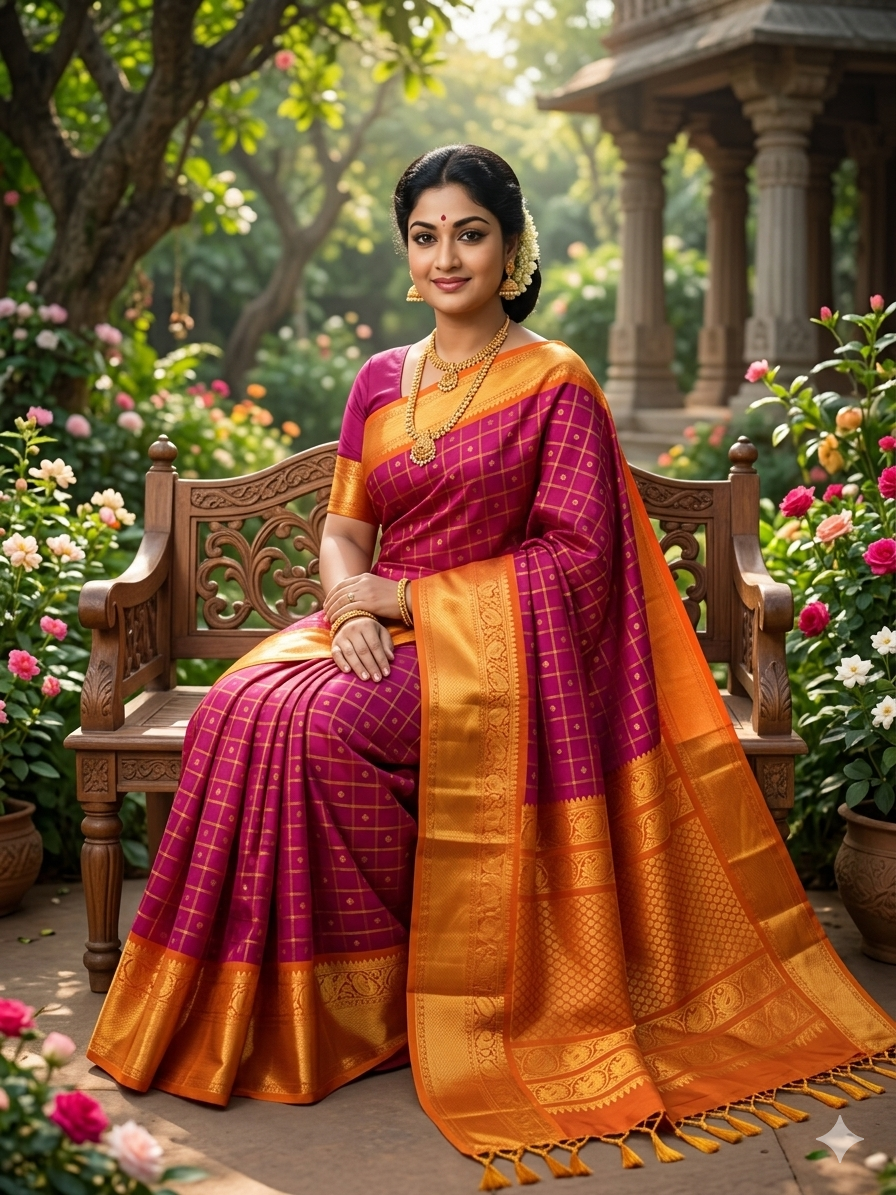
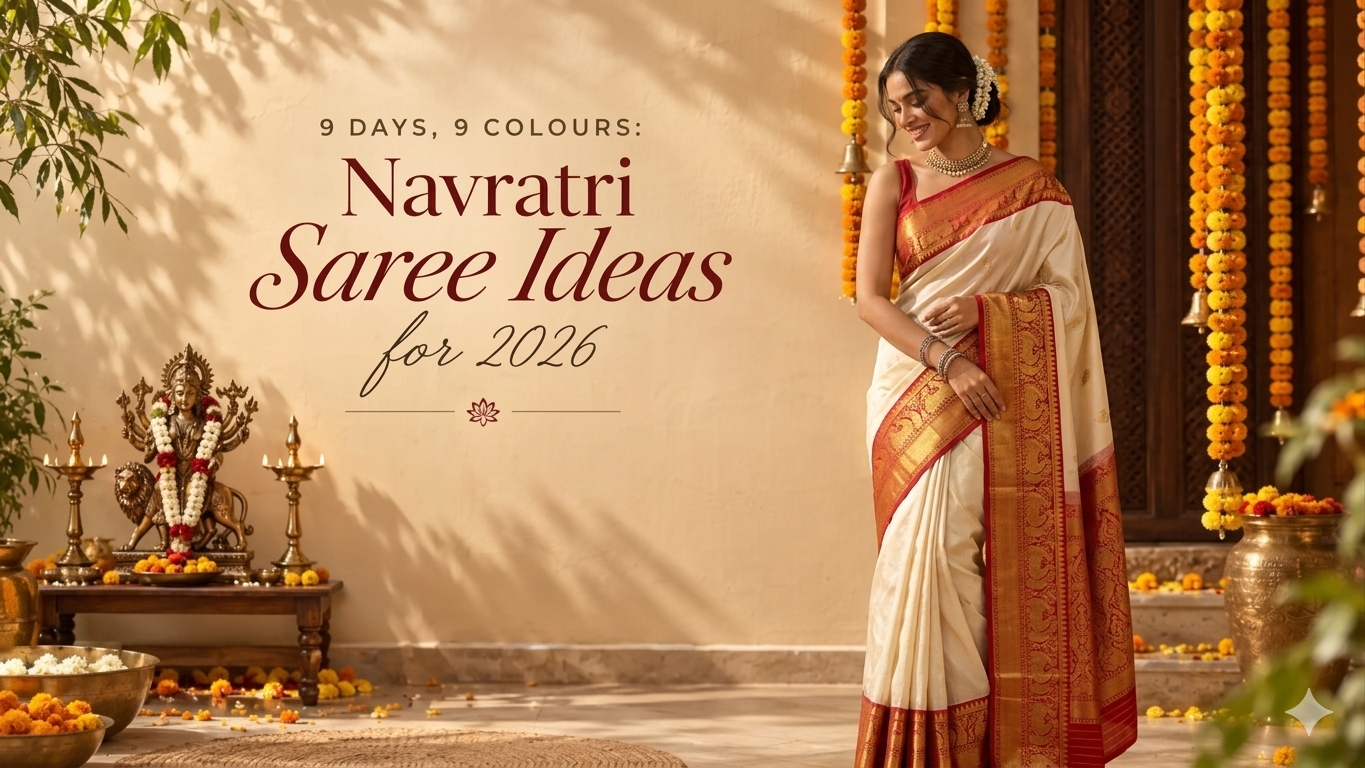
wear Gadwal Handloom Pure Silk Sarees for 9 Days, 9 Colours for this 2026 Navratri
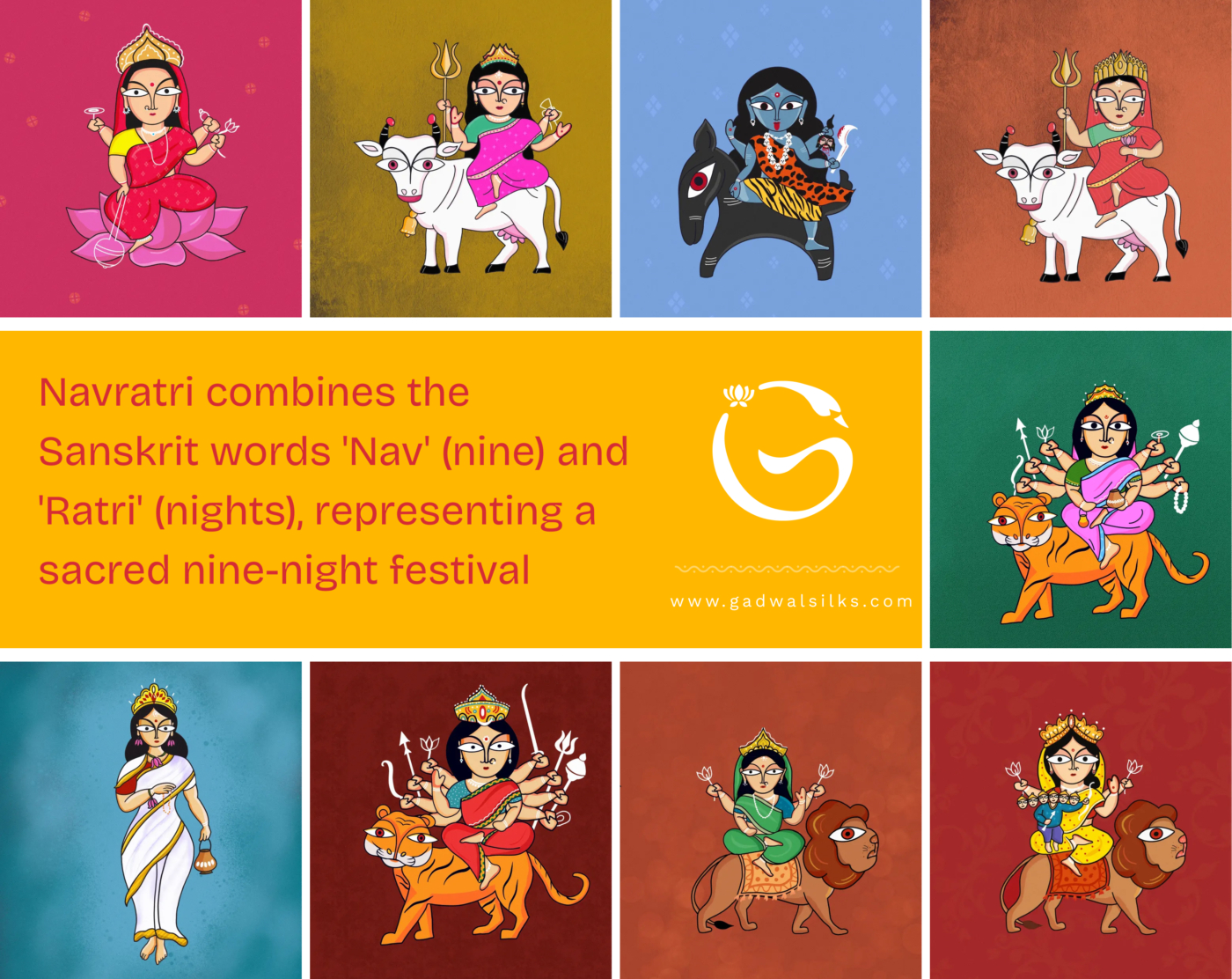
Navratri combines the Sanskrit words ‘Nav’ (nine) and ‘Ratri’ (nights), representing a sacred nine-night festival
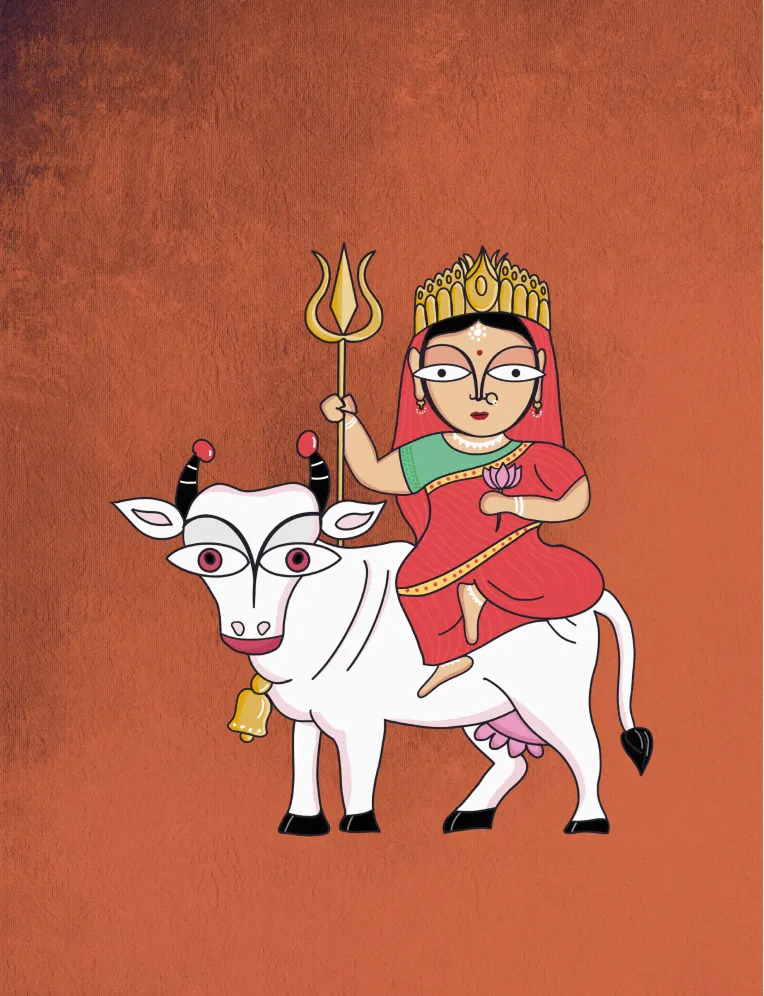
Shailaputri (Day 1): Shailaputri, the daughter of the mountains, is the first form of Navdurga. She symbolizes the power of nature and purity. She is depicted riding a bull and holding a trident in her hand, representing strength and courage.
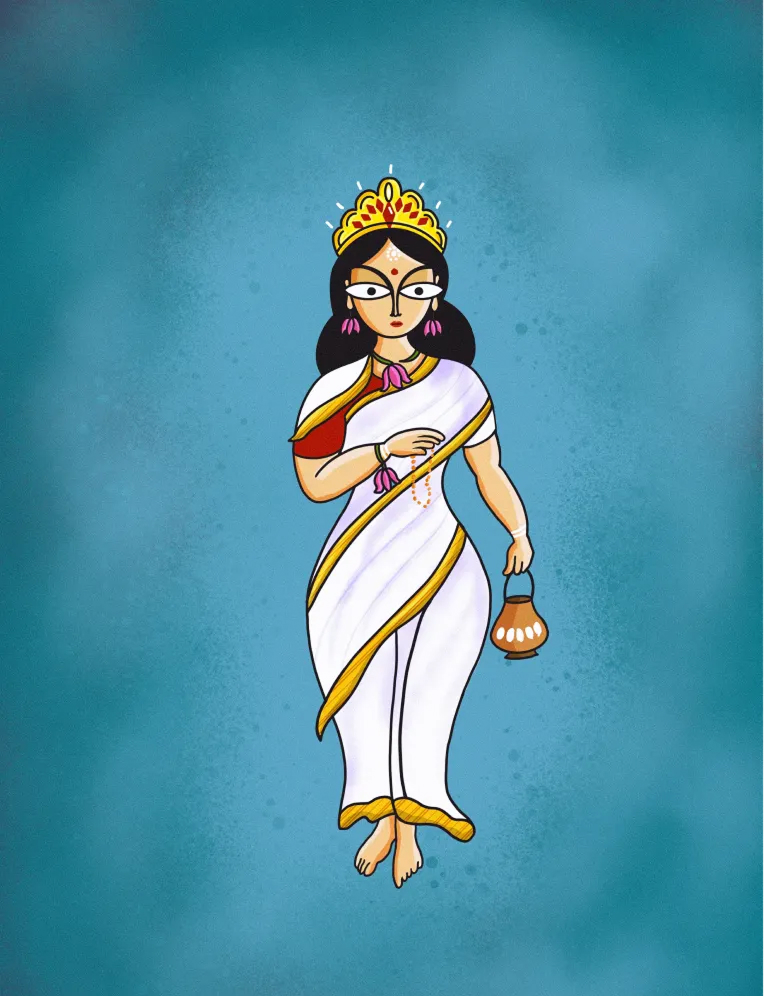
Brahmacharini (Day 2): Brahmacharini, the ascetic form of Goddess Durga, represents penance and devotion. She is depicted as walking barefoot with a rosary in one hand and a water pot in the other, symbolizing her dedication to spiritual practices.
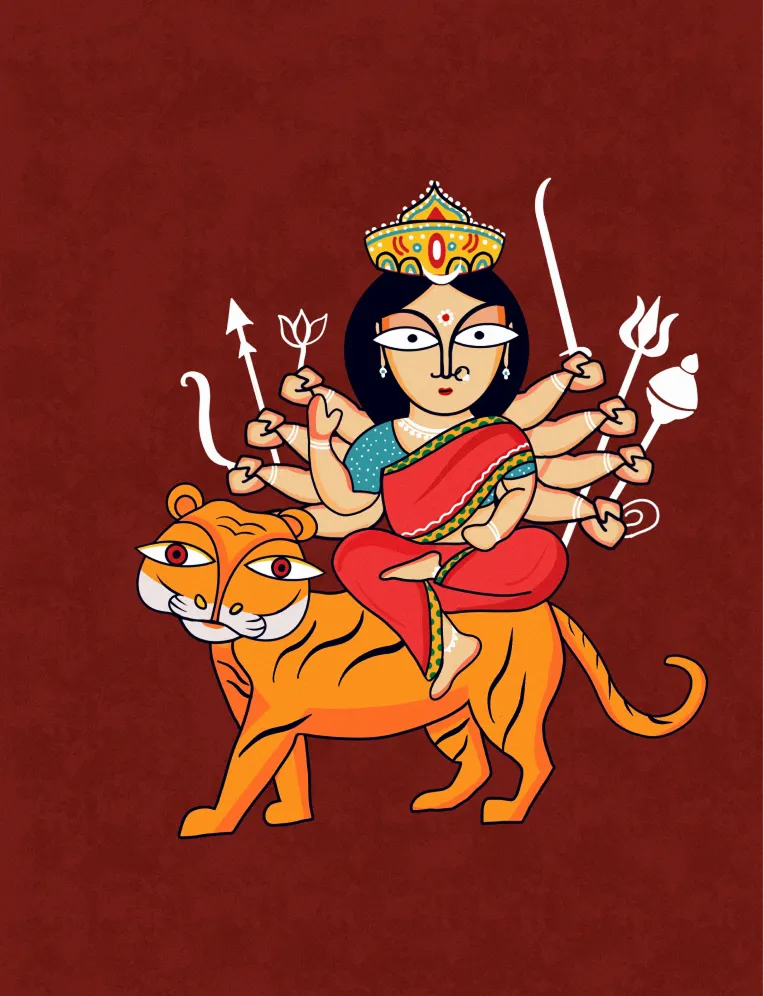
Chandraghanta (Day 3): Chandraghanta, the third form of Navdurga, is known for her beauty and bravery. She is depicted with a crescent moon adorning her forehead, symbolizing peace and serenity. She rides a lion and holds weapons in her hands to protect her devotees from evil forces.
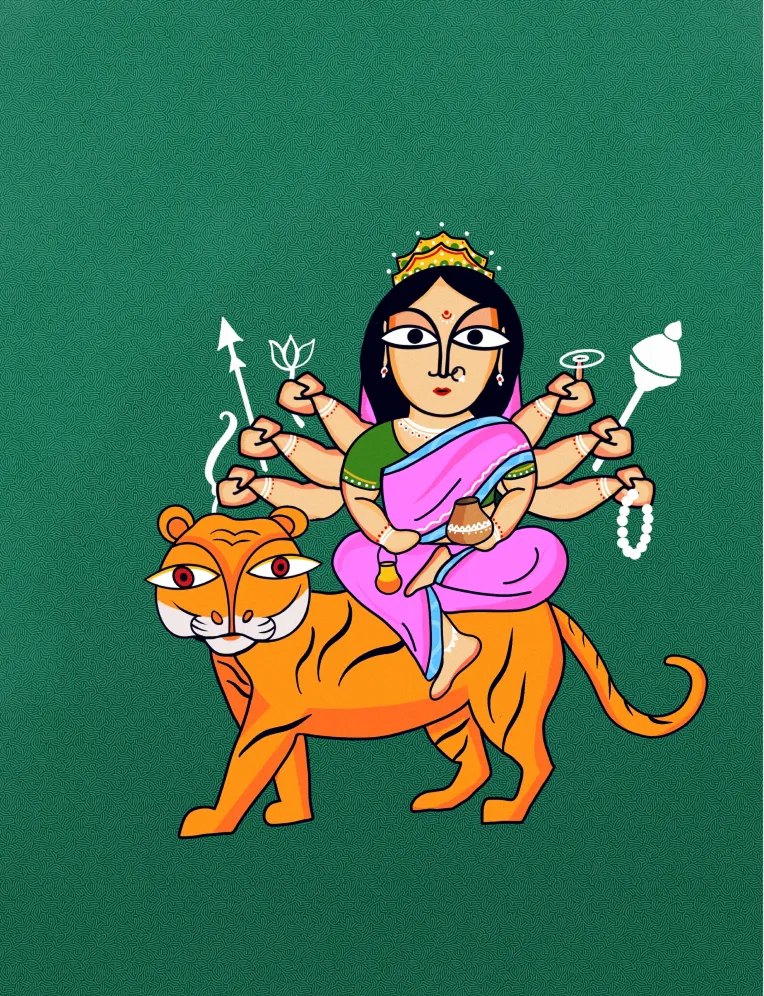
Kushmanda (Day 4): Kushmanda, the fourth form of Navdurga, is believed to have created the universe with her divine smile. She is depicted with eight arms, each holding a different weapon and symbol of power. She rides a lioness and brings light and energy to the world
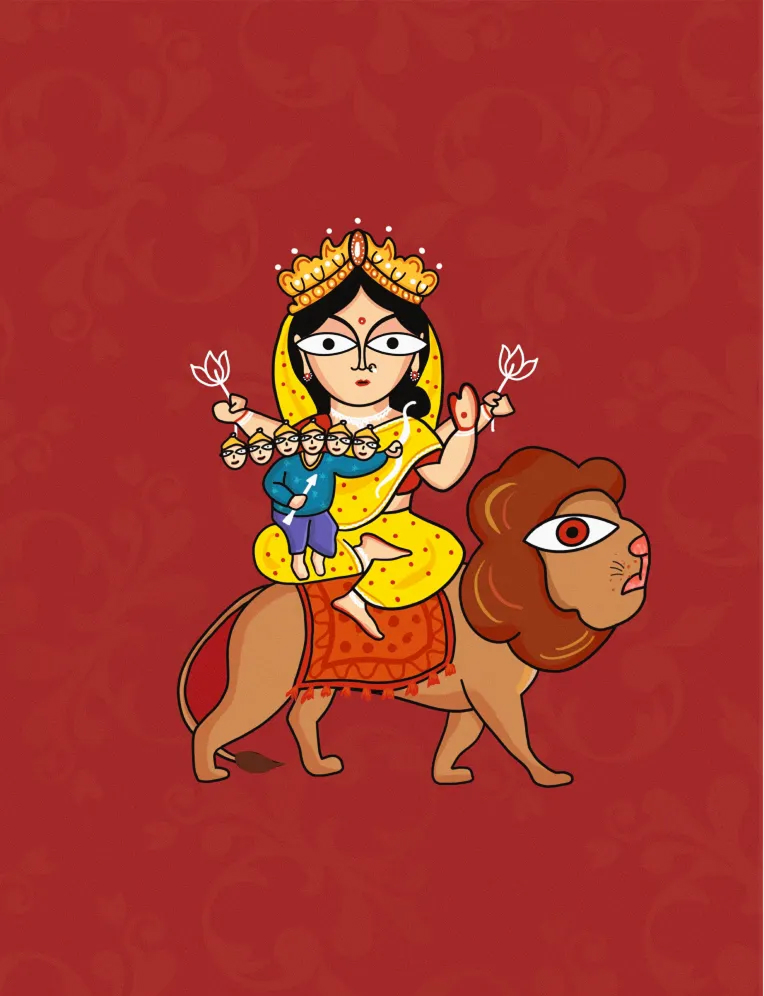
Skandamata (Day 5): Skandamata, the mother of Skanda (Lord Kartikeya), is worshipped on the fifth day of Navratri. She is depicted holding her son Skanda in one hand and a lotus flower in the other. She rides a lion and represents maternal love and protection.
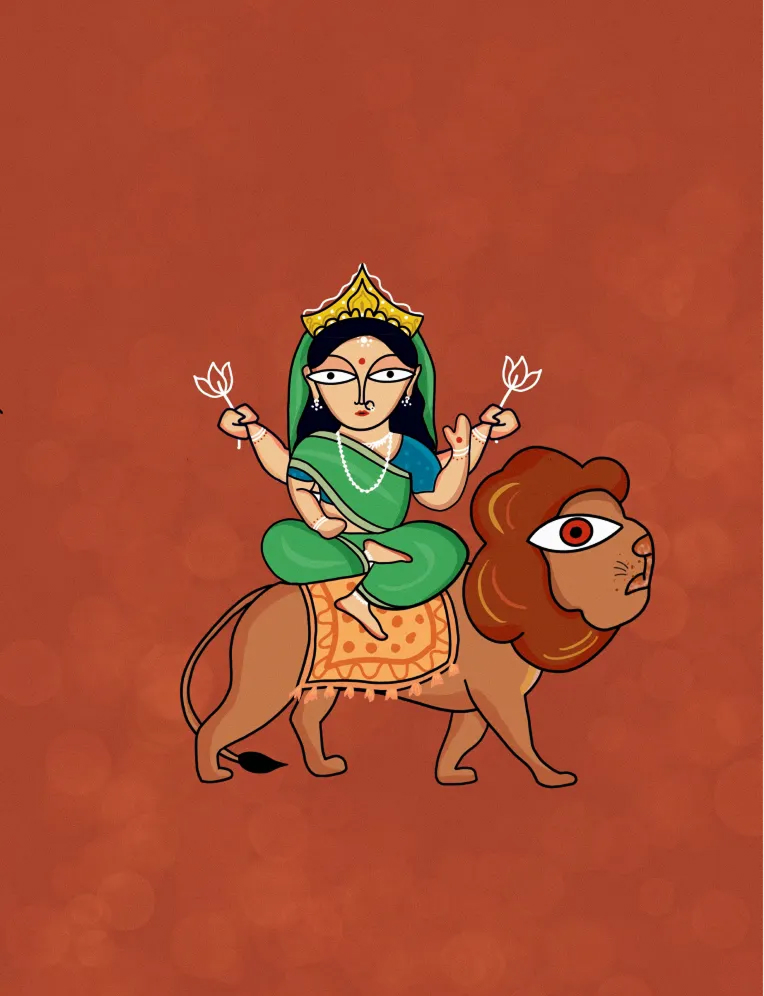
Katyayani (Day 6): Katyayani, the fierce form of Durga, is worshipped on the sixth day of Navratri. She is depicted with four arms, carrying a sword and a lotus, and riding a lion. She symbolizes courage and victory over evil.
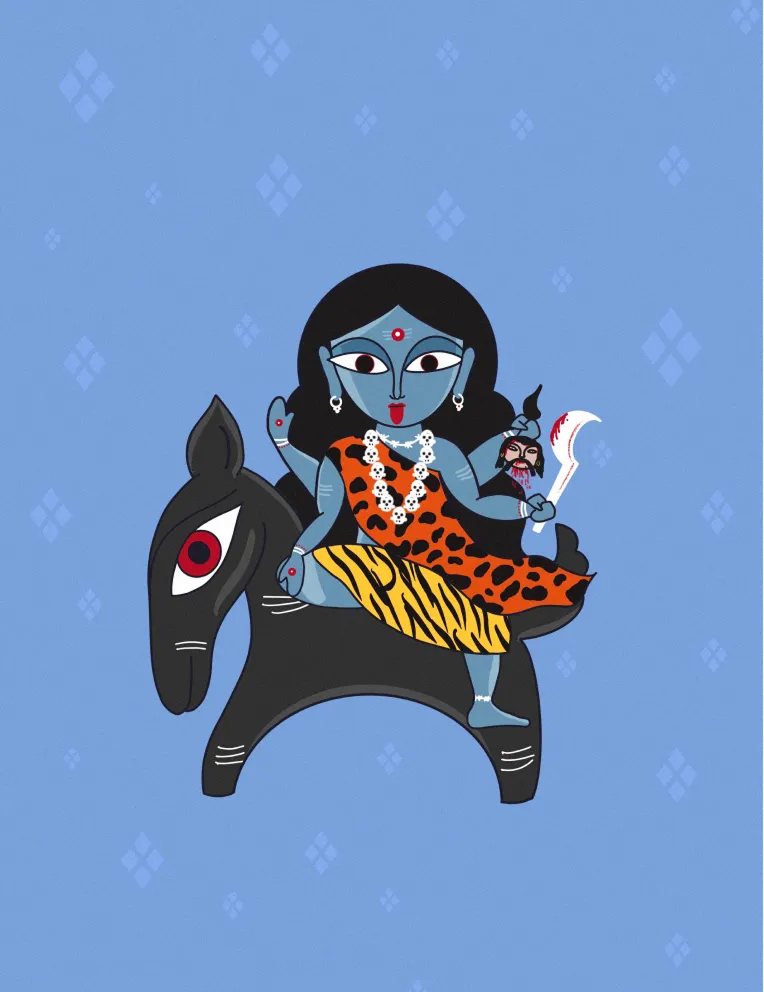
Kaalratri (Day 7): Kaalratri, the most ferocious form of Navdurga, is worshipped on the seventh day of Navratri. She is depicted with a dark complexion and a fierce expression, riding a donkey. She destroys ignorance and brings light into darkness.
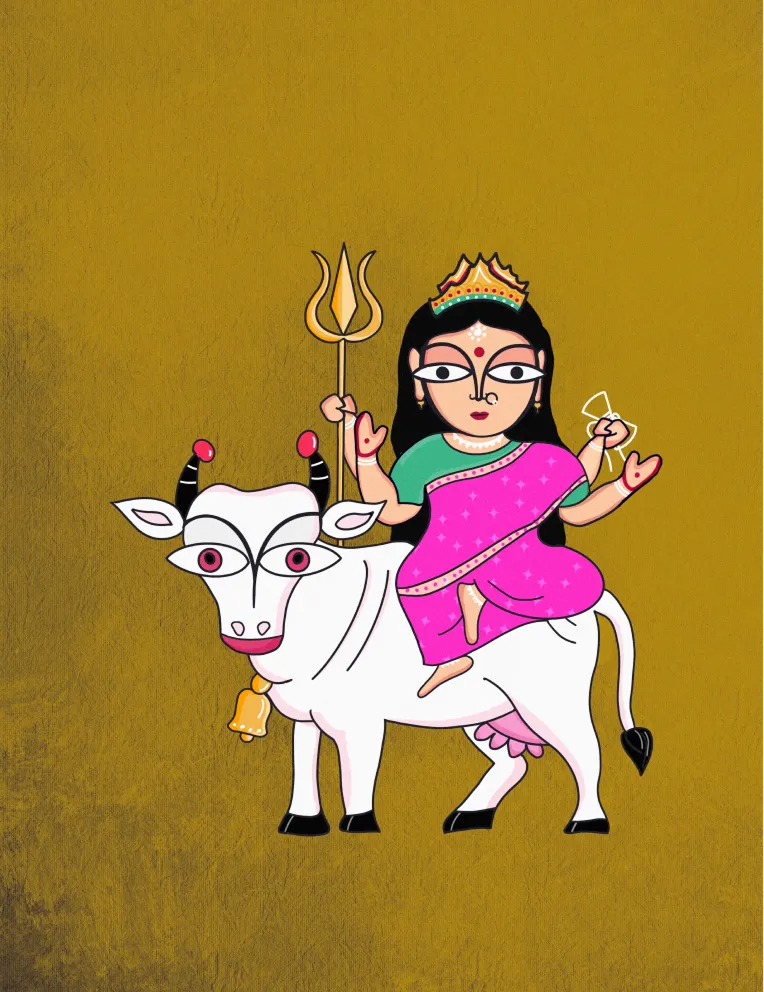
Mahagauri (Day 8): Mahagauri, the eighth form of Navdurga, symbolizes purity and serenity. She is depicted with a fair complexion, wearing white clothes, and riding a bull. She brings peace and harmony to her devotees.
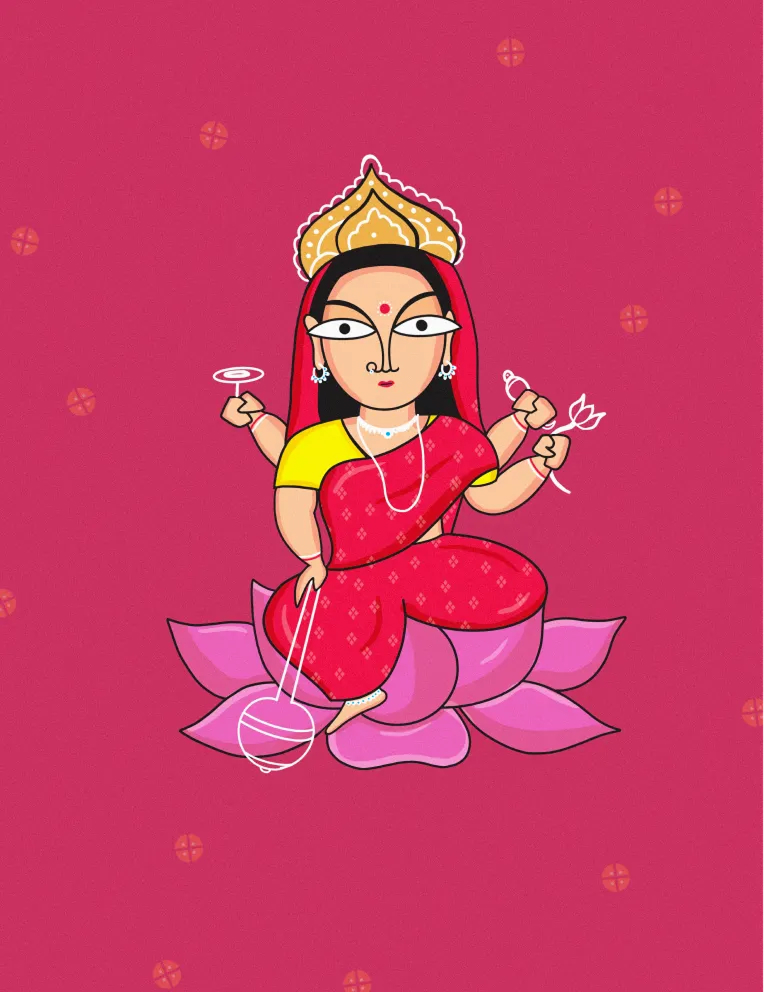
Siddhidatri (Day 9): Siddhidatri, the ninth and final form of Navdurga, is worshipped on the ninth day of Navratri. She is depicted with four arms, holding a discus, a conch shell, a lotus flower, and a mace. She grants her devotees spiritual powers and blessings.
The term Navratri translates directly to “nine nights.”
(Credits) Artist : Rishikesh Malviya
Frequently Asked Questions
Q) What is the Navratri saree colour for each day in 2026?
Ans) Day 1 orange, day 2 white, day 3 red, day 4 royal blue, day 5 yellow, day 6 green, day 7 grey, day 8 purple, day 9 peacock green, running 11 to 19 October 2026.
Q) Why does the Navratri saree colour sequence change every year?
Ans) It’s based on which weekday the festival begins, since each weekday has a planetary ruler with its own colour. A different starting day means a different order.